Ways to play E♭
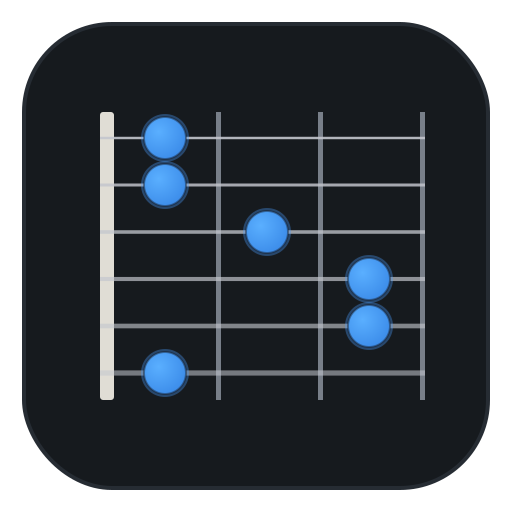
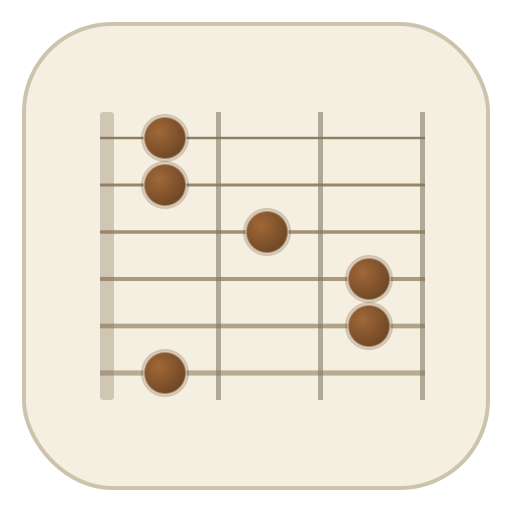
Lowest on the neck first. Tap a shape to put it on the fretboard above and hear it. The numbers are fingers (1 is your index), × means leave that string out, and ○ means let it ring open.
What's in E♭
A major chord stacks a major 3rd (four half steps) and a perfect 5th (seven half steps) on the root. For E♭ that gives E♭, G and B♭. Every shape below is some arrangement of those three notes, with a few doubled in another octave.
| Note | Formula | Interval from E♭ |
|---|---|---|
| E♭ | 1 | Root |
| G | 3 | Major 3rd |
| B♭ | 5 | Perfect 5th |
Major chords sound settled and bright. They are the I, IV and V of every major key, which is why so many songs get by on three of them.
The key of E♭ major
Three flats. A horn-section key: saxophones and trumpets like it. Guitarists who tune down a half step play it with open E shapes.
The seven chords built from the E♭ major scale:
Songs in E♭ major
- Your Song, Elton John
Keys that use E♭
Every major and minor key whose scale contains all of E♭, G and B♭, and the chord's Roman numeral in each. Minor keys marked harmonic get the chord from the raised 7th of the harmonic minor scale.
| Key | E♭ is the |
|---|---|
| E♭ major | I |
| B♭ major | IV |
| A♭ major | V |
| G♯ minor (harmonic) | V |
| G minor | VI |
| C minor | III |
| F minor | VII |
Progressions to try
Related chords
The relative minor is Cm, which shares its key signature. The parallel minor is E♭m, same root with the 3rd lowered.
Other chords on E♭: