
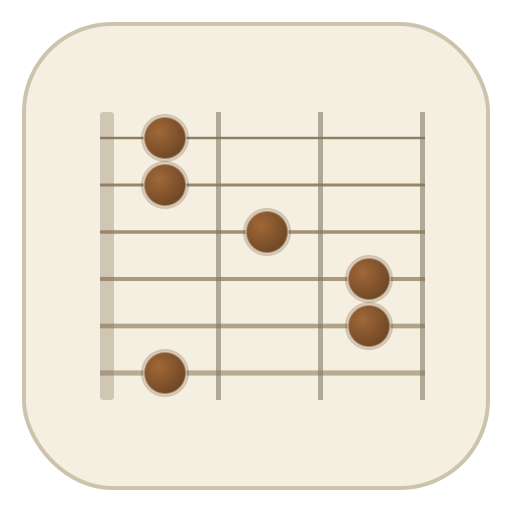
Ways to play G♯m
Lowest on the neck first. Tap a shape to put it on the fretboard above and hear it. The numbers are fingers (1 is your index), × means leave that string out, and ○ means let it ring open.
What's in G♯m
A minor chord lowers the 3rd by a half step: root, minor 3rd (three half steps) and perfect 5th. G♯ minor is G♯, B and D♯. Next to G♯ major, the only note that moves is the 3rd, B♯ down to B.
| Note | Formula | Interval from G♯ |
|---|---|---|
| G♯ | 1 | Root |
| B | ♭3 | Minor 3rd |
| D♯ | 5 | Perfect 5th |
Darker and more inward than major. In a major key the ii, iii and vi chords are minor; in a minor key the i and usually the iv are.
The key of G♯ minor
Five sharps, the relative minor of B. Mostly barre chords; a capo on the 4th fret lets you use Em shapes instead.
The seven chords built from the G♯ minor scale:
Keys that use G♯m
Every major and minor key whose scale contains all of G♯, B and D♯, and the chord's Roman numeral in each.
| Key | G♯m is the |
|---|---|
| G♯ minor | i |
| E♭ minor | iv |
| C♯ minor | v |
| F♯ major | ii |
| B major | vi |
| E major | iii |
Progressions to try
i–iv–v in G♯ minor
Minor-key blues and folk. Swap the v for a major V when you want a stronger pull home.
i–VI–III–VII in G♯ minor
The minor-key cousin of I–V–vi–IV: the same four chords, started from the minor one.
Related chords
The relative major is B, which shares its key signature. The parallel major is A♭, same root with the 3rd raised.
Other chords on G♯: