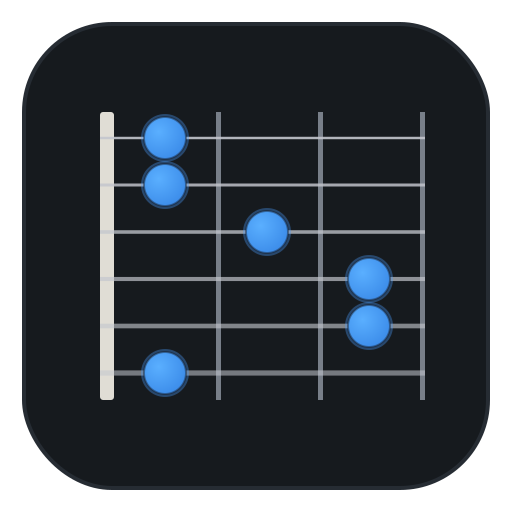
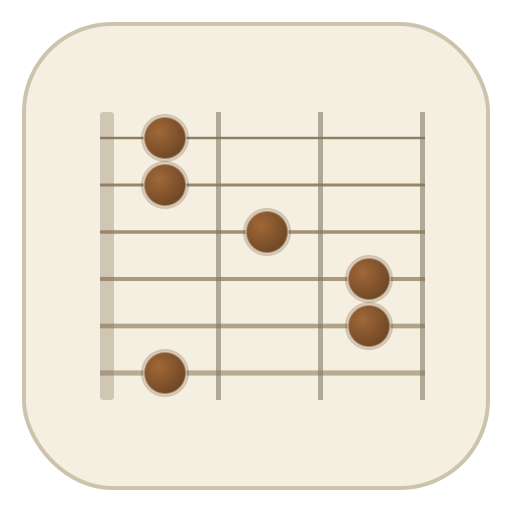
Ways to play E7
Open position first, then up the neck. Tap a shape to put it on the fretboard above and hear it. The numbers are fingers (1 is your index), × means leave that string out, and ○ means let it ring open.
What's in E7
A dominant 7th is a major triad plus a flat 7th, the note a whole step below the root. E7 is E, G♯, B, D. The 3rd (G♯) and ♭7 (D) are a tritone apart, and that tension is what makes the chord want to move.
| Note | Formula | Interval from E |
|---|---|---|
| E | 1 | Root |
| G♯ | 3 | Major 3rd |
| B | 5 | Perfect 5th |
| D | ♭7 | Minor 7th |
On its own it sounds unfinished, so in most music it is the V chord that leads home: E7 to A. Blues is the exception. There every chord can be a dominant 7th and nothing has to resolve.
Keys that use E7
Every major and minor key whose scale contains all of E, G♯, B and D, and the chord's Roman numeral in each. Minor keys marked harmonic get the chord from the raised 7th of the harmonic minor scale.
| Key | E7 is the |
|---|---|
| A major | V7 |
| A minor (harmonic) | V7 |
| F♯ minor | VII7 |
Progressions to try
V7–I in A major
What a dominant 7th is for: the ♭7 and 3rd pull hard toward the chord a fourth up.
Related chords
Other chords on E: