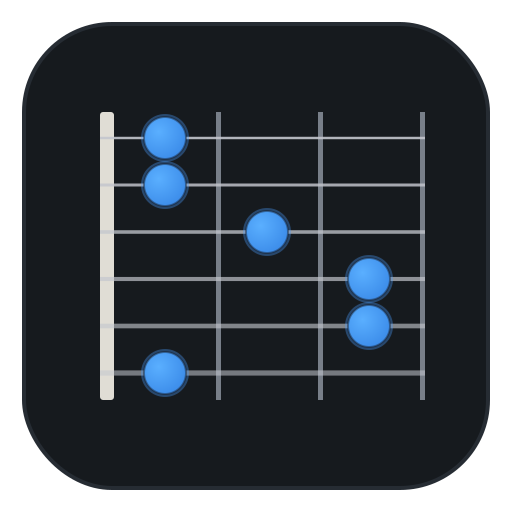
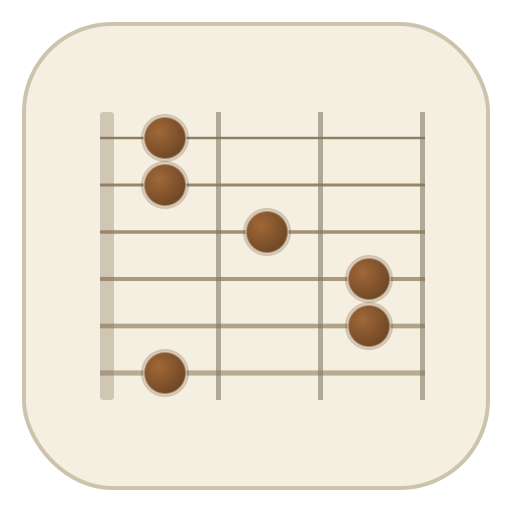
Ways to play Gaug
Open position first, then up the neck. Tap a shape to put it on the fretboard above and hear it. The numbers are fingers (1 is your index), × means leave that string out, and ○ means let it ring open.
What's in Gaug
An augmented triad stacks two major 3rds: root, major 3rd and sharp 5th. Gaug is G, B, D♯. Major 3rds split the octave into three equal parts, so Gaug, Baug and E♭aug are the same three notes; the bass decides which name fits.
| Note | Formula | Interval from G |
|---|---|---|
| G | 1 | Root |
| B | 3 | Major 3rd |
| D♯ | ♯5 | Augmented 5th |
Dreamy and unresolved, a major chord with its 5th pushing upward. You mostly hear it in passing: between I and IV, or in a line cliché where the 5th climbs a half step at a time.
Keys that use Gaug
An augmented triad doesn't fit inside any major or natural minor scale, so it never shows up as a home-key chord. It is a passing chord, borrowed for a beat on the way somewhere else, as in the progressions below.
Progressions to try
I–I+–I6–I7 in G major
The line cliché: the 5th climbs a half step at a time while the rest of the chord holds still.
Related chords
Other chords on G: